

Do you often talk to yourself in your head?
Of course, you do. Everybody does.
But do you know which parts of yourself you are talking to and which parts are speaking?
I appreciate that might sound like a wacky question to some people, but it is raised for good reason.
There are three voices in your head.
The voices you hear might sound like one voice — yours — but there are actually three.
Think about this.
There is a common expression in English that goes: “I’m caught in two minds.”
Sometimes we say, “I’m between a rock and a hard place.”
If you’re “caught in two minds” or between a rock and a hard place, there must be three voices.
You and two minds: the rock and the hard place.
The three voices in your head are also conceptualised with the image of the devil whispering into one ear and the angel into the other.

The devil says: “Go on, it’s fine. You can quit tomorrow.”
The angel says: “”Don’t do this. You said you’d quit. You know this is better for you.”
The third voice is You, caught in the middle. You normally say, “Oh, I don’t know what to do.”
You is the decision-maker. You have to choose whether to listen to the angel, the devil or do something else.
So which voice should you listen to and what should you do?
The Self-ego Axis
In Jungian psychology, the dynamic of the three voices is known as the Self-ego axis which you can read more about here.
The concept was developed by psychologist Erich Neumann, building on Carl Jung’s work on the Self and the ego.
In Jung’s framework, this axis functions as the seat of conscious awareness. When the connection between the ego and the deeper Self is strong and intact, psychological health and overall wellbeing tend to be at their best.
When the connection between the Self-ego axis is damaged, irrational behaviours and illness are more likely. Jung noted that complexes — childish and irrational behaviours become neuroses such as depression and anxiety.
Depression and anxiety can lead to debilitating illnesses.
When a person becomes disconnected from their Self, You is increasingly governed by the ego.
However, the ego keeps you in your bubble of comfort. Its job is to protect your emotional safety, so it steers you toward sources of comfort.
Comfort foods, safety nets, guilty pleasures.
The ego is fundamentally oriented toward short-term survival. It only knows what has protected your integrity, soothed your emotions or given you pleasure in the past.
The Self, on the other hand, foster genuine growth and psychological maturity. Jungian analyst Edward Edinger described the Self as the superior authority.
When the Self-ego axis is intact, the Self would ordinarily have governance and autonomy over the ego.
“The Self is the ordering and unifying center of the total psyche (conscious and unconscious) just as the ego is the center of the seat of subjective identity whilst the Self is the seat of objective identity. The Self is thus the supreme psychic authority and subordinates the ego to it.”
~ Edward Edinger, Ego and Archetype
However, when the Self-ego axis is severed, You lose contact with your Self and get pulled into the external world with which the ego associates.
The Role of the Self
The Self encourages the personality to evolve. Its role is to integrate the parts of your personality that have become split off and repressed.
In other words, the parts of your personality that were deemed unacceptable by parents, teachers and peers.
These repressed parts of the personality are called archetypes. Each of the archetypes has specific and recognisable patterns of thoughts, actions and emotions that influence how you experience your life.

The Swiss described how the archetypes give life meaning. They underlie the full range of human capacity — courage and cowardice, compassion and indifference, trust and distrust etc.
For Jung, integrating the archetypes into conscious life was essential for maintaining psychological and physical health.
The voice of the Self, therefore, is worth listening to.
The trouble is, this voice doesn’t carry the same emotional charge as the ego. So You tend not to listen. You might follow it for a little while, but the ego keeps whispering that one more time won’t matter.
Eventually, you give in and fall back into habitual patterns.
The Archetypes of the Collective Unconscious
Jung identified the archetypes with the collective unconscious — patterns shared across humanity, expressed throughout art, myth, and film.
Since archetypes represent human qualities, they are universal. The Swiss argued that when a person — You — identifies with archetypal patterns, it shapes the whole personality.
However, if an archetype is split off, it creates a complex or neuroses. The more archetypes that remain unconscious, the more fragmented the mind becomes and the less capable you are at managing life.
Jung was also careful to distinguish complexes and neuroses from pathological fragmentation, although they are stepping stones on the path to debilitating disease.
When the ego is adapted to the world, the archetypes carry coherent memories that give life meaning. When they are fragmented, the ground is laid for conditions that distort reality, such as dissociative identity disorder.
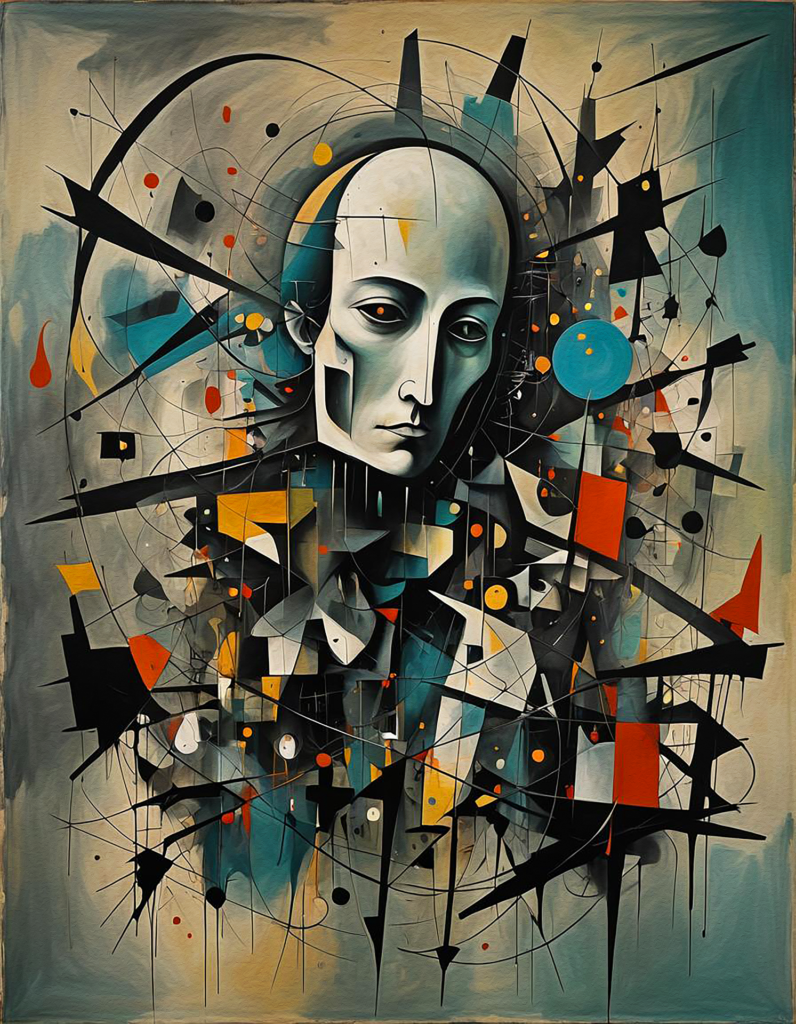
What is Dissociation?
The concept of a damaged Self-ego axis ties in with Pierre Janet’s theory of dissociation. The French psychologist noted that when instinctive drives or experiences are denied expression, the nervous system can’t properly integrate them into the conscious mind.
Rather than becoming part of an organised memory and unified sense of Self, these unintegrated pieces — behaviours, thoughts, and emotions — sink into the unconscious.
For example, if you were boisterous as a child and punished for being noisy, your central nervous system would repress your loud and boisterous nature.
To fill the void vacated by the boisterous archetype, another archetype would appear to ensure you were quiet and respectful towards your parents.
As you mature, you become more accustomed to being quiet and doing as you’re told. You have lost the capacity to be excitable and speak your mind.
Consequently, your life becomes limited and you’re unable to manage life to the best of your ability.
Archetypal Energies
Archetypes are essentially psychic energy. And all energy carries information. The information communicated between neural networks in the brain determines what you do, what you think and how you feel.
Neuroscientist Joseph LeDoux makes a related point from a neurobiological angle: that personality is a reflection of the patterns of connection between neurones.
“Most of the time the brain holds the self together pretty well. But when connections change, personality too, can change…if the self can be disassembled by experiences that alter consciousness, presumably it can be reassembled by experiences that establish, change, or renew connections.
~ Joseph LeDoux, Synaptic Self, p.307, (2002)
When the Self-ego axis is damaged, you lose access to information that would otherwise serve as an enabler to navigate life effortlessly. You become cut off from archetypal qualities that would otherwise make challenging situations easier to handle.
When these archetypal qualities get split off from conscious awareness, they resurface as complexes and neuroses.
Jung described neurosis as a kind of internal self-division — and the more divided a person becomes, the more one-sided, and the more prone to developing further complexes.
That one-sidedness tends to show up as increased hostility and friction with others. Jung also observed that some people go so far as to suppress their better qualities entirely while giving free rein to more infantile, unchecked impulses.
Healing this axis means reconciling the opposing energies within the archetypes and bringing them into balance.
Becoming whole requires bringing the repressed parts of the personality back into the light of the conscious mind.
Once unconscious material becomes conscious, a person is far better equipped to learn new behaviours and attitudes that improve their life.
Recognising the three internal voices in your head is a key step towards Self development.
When the archetypes are fully accessible and integrated, what follows is a state of genuine peace, love, and wisdom.
Want to know more about the Self-ego axis?
If you want to know more about the Self-ego axis, we have published an in-depth article titled: Carl Jung’s Collective Unconscious: What Is The Self-ego Axis.
Alternatively, discover how your archetypes influence your life, and then create the life you want to live by integrating the archetypal qualities you need to live it. Sign up for our life coaching program today.
