
What Are Archetypes?
In short, archetypes are identifiable patterns of thoughts, actions, and emotions which influence how you experience life. Archetypes make you do what you do and feel how you feel.
To put it most simply, archetypes are parts of your personality, each of which serves a function. In addition, they all have specific qualities they can offer in environments in which they serve a function. Each archetype has helpful and unhelpful qualities, positive and negative, constructive or destructive.
Archetypal qualities are cognitive functions, feelings, attitudes, motivations and behaviours, i.e; discernment, joy, love, criticism, frustration, manipulation etc.
There are 12 major archetypes that oversee every aspect of your life.
Learn to understand your archetypes and you will know why you behave how you behave and feel. Archetypes bloom in three stages; child or initiation stage, maturity or deve and wisdom.
The eminent psychoanalyst Carl Jung noted that archetypes have a life of their own which “eventually rise up to take possession of the ego.” [1]
Possession typically results in maladaptive strategies that keep you rooted in unconscious compulsions and a childish milieu robbed of freedom, dependence and autonomy. [2]
At the same time, there are repressed parts of your personality that can give you access to beneficial qualities if they are expressed.
Courage, for example.
Or how about joy, love and gratitude?
Every human quality that is accessible to you is a learned behaviour. Archetypal qualities are information, consciousness.
Look at the word IN-FORMATION.
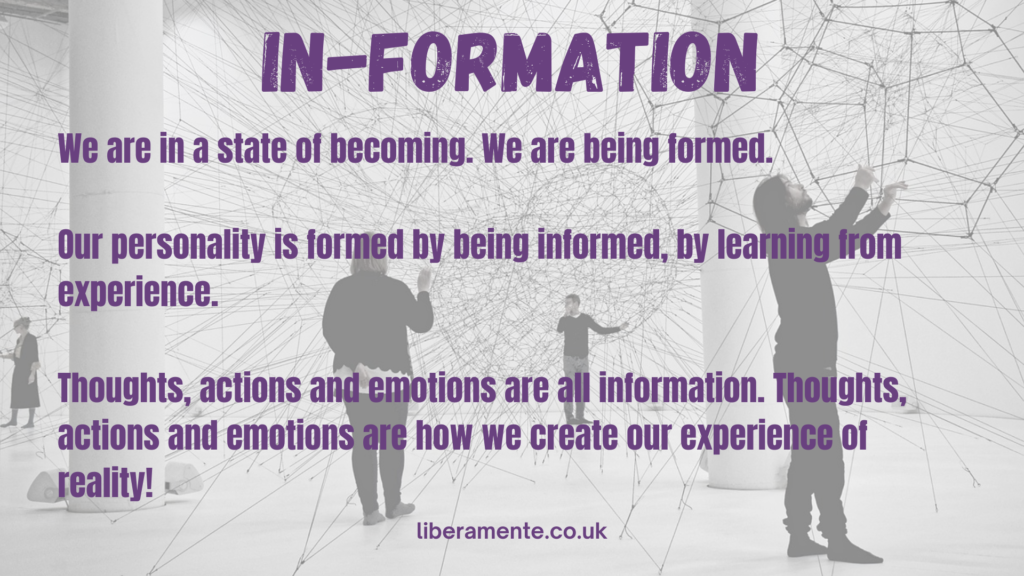
You are in the process of being formed. Integrate archetypal qualities, and you become better adapted to life; more skilled, wiser, emotionally intelligent.
These parts of your personality just need the opportunity to develop.
- Whenever you are told you are not good, or you feel rejected, unworthy, or useless, parts of your personality are “dismembered.”
- Dismembered archetypes are known as complexes, childish and irrational behaviours.
- The goal of personal development is to succeed in life, you have to Re-member that parts of your personality that have been repressed, forgotten and ignored.
What if I were to tell you that it’s possible to identify how cyclical patterns of behaviour, thoughts, and emotions are at the roots of the problems, challenges and conflicts you experience in your life?
You can identify these patterns using the archetypes model designed by Libera Mente.
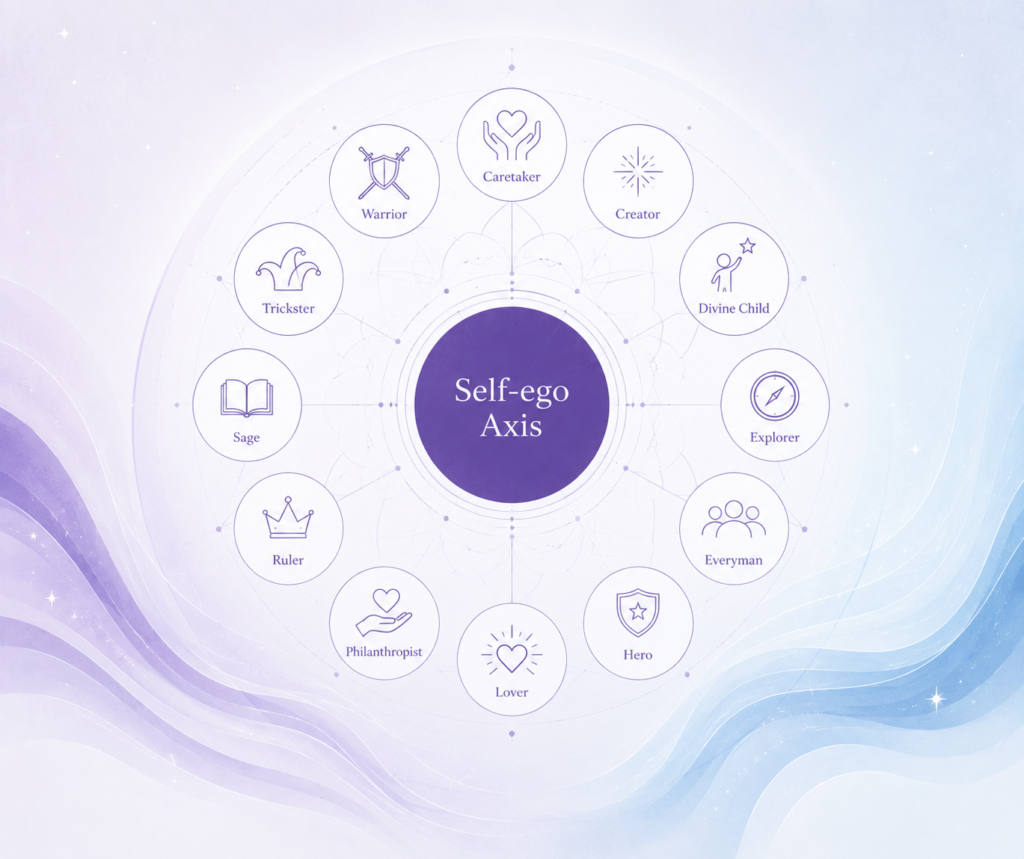
Drawing on studies in the fields of psychology, neurobiology, quantum physics and consciousness research, the archetypes model illustrates:
- how maladaptive coping strategies emerge,
- how to identify the archetype the complex belongs to and
- how to integrate these undeveloped parts of your personality.
Understanding the underlying cause behind problems, challenges, and conflicts brings you to a point of self-awareness. Awareness is the catalyst that can lead to satisfactory resolutions.
The issues you experience do not exist by chance. They are warning signals urging you to evolve, to expand conscious awareness in ways that enable you to manage life with less stress and more fulfilment.
Improving the aspects of your life that you find challenging involves integrating the character traits, attitudes and behaviours of repressed archetypes.
Qualities such as altruism, clarity, acceptance, unconditional love, self-trust, humility and self-direction can transform your life in situations where they are needed.
Although archetypal qualities are innate, they become dismembered, buried, lost and forgotten in the “non-conscious”. To experience a better quality of life, these qualities have to be learned and integrated into the conscious personality.
For most people, the mind is a slave to emotions. The Libera Mente archetypes model enables you to liberate your mind and live a happy, meaningful and fulfilling life.

Archetypes Explained
Archetypes possess every quality accessible to mankind. Therefore, they perform specific functions. The archetype that influences your life is determined by the action you need to perform in any given moment.
The more archetypal qualities you store as memory and develop, the more empowered and whole you become. The better equipped you are to navigate the challenges you encounter in life.
The vast majority of what I know about archetypes and psychodynamics is from the eminent psychoanalyst Carl Jung.
Jung noted that our personalities are shaped by archetypes and influences how we experience life. Some archetypal qualities we are consciously aware of and they help us to adapt to our environment in helpful, positive and constructive ways.
However, we can also be too one-sided and repress some aspects of personality. Repressed archetypes have qualities we could use to achieve satisfactory outcomes more often.
Taking this point of view, it is the archetypes, or the qualities you don’t often use, that you should pay most attention to.
Be honest with yourself.
Whenever you experience a challenge, conflict or emotional outburst when the proverbial straw breaks the camel’s back, life is teaching you a lesson. It is asking you to observe and realise why you feel stressed.
The stress response is triggered when the Emotional Brain senses danger. But the Emotional Brain mostly senses danger when it doesn’t have a program, or information, that tells you what to do.
The Emotional Brain does not like uncertainty. It does not like being made to feel worthless, useless or rejected.
When the Emotional Brain is triggered, it activates a response that serves as a coping mechanism. However, coping mechanisms are usually maladaptive.
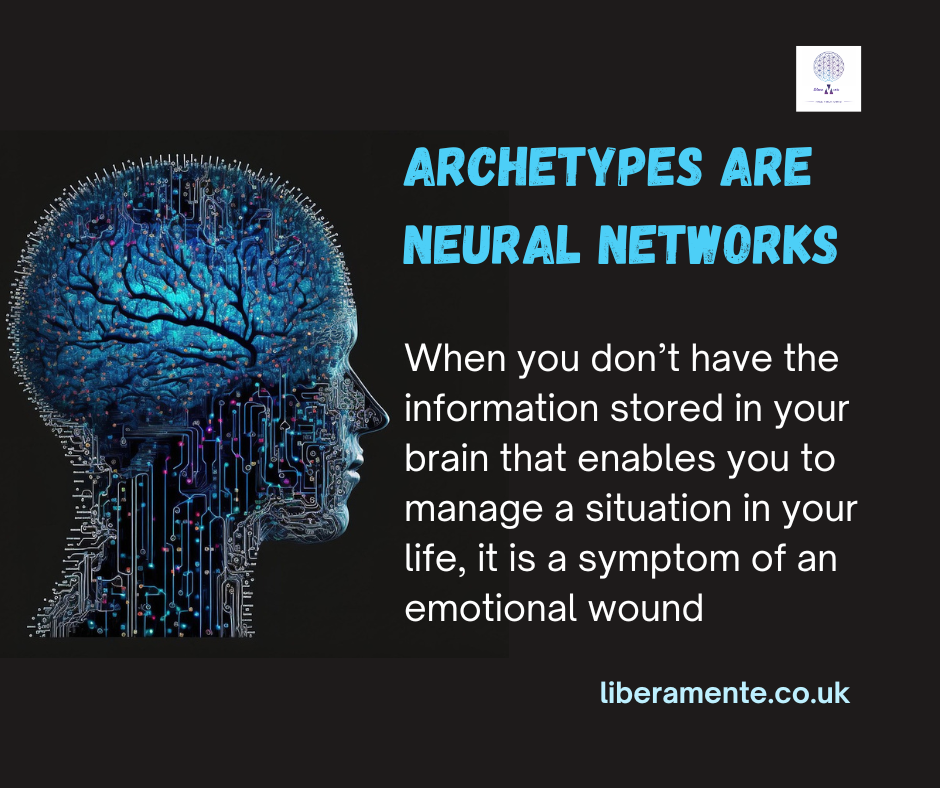
Maladaptive behaviours are indicative of being unable to cope with a certain situation in your life because you don’t have the archetypal qualities that enable you to cope; i.e. acceptance, self-love, forgiveness.
Repressed archetypes are easy enough to recognise by observing their less desirable qualities that prompt outbursts of anger, feelings of humiliation or people-pleasing, to name a few.
When archetypes are undeveloped, it’s because the archetypal quality is not stored as a memory in your central nervous system.
Archetypes Are Subtle Energies
The archetypes model is a powerful self-development tool which can be used to expand conscious awareness and raise your energetic frequency.
Some of the great thinkers of our time recognised that expanding conscious awareness — becoming the best version of yourself — is the key to optimal happiness, health and success.
In modern times, a growing body of medical evidence is showing that repressed emotions have a significant role to play in the burgeoning number of mental and physical health issues the world is experiencing today.
Chronic stress is the chief cause for many of today’s illness and debilitating diseases.
Chronic stress is caused by emotional stress.
Repression, as Sigmund Freud pointed out over 100 years ago, is the underlying cause of neurosis. Jung also noted repression initially emerges as a complex, then neurosis, then disease.
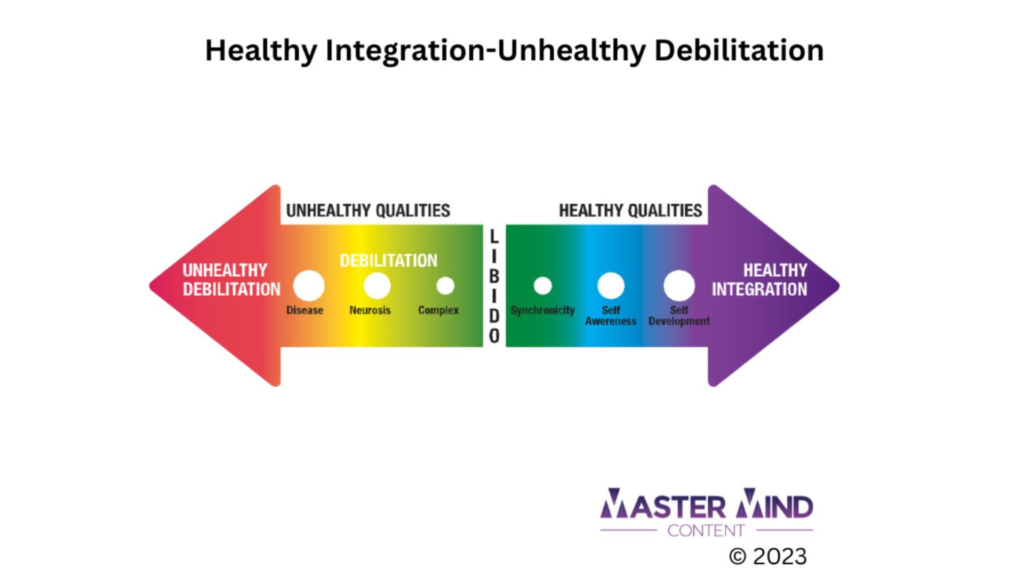
Repression is clinging to an existing way of being.
When an archetypal quality is denied expression, the energy manifests as an “infantile malady.” [3]
Jung agreed with Freud’s findings. “Neurosis is self-division,” he wrote. [4]
“The neurotic has the soul of a child who bears ill with arbitrary restrictions whose meaning he does not see; he tries to make this morality his own, but falls into disunity with himself: one side of him wants to suppress, the other longs to be free — and this struggle goes by the name of neurosis. Were the conflict clearly conscious in all its parts, presumably it would never give rise to neurotic symptoms; these occur only when we cannot see the other side of our nature and the urgency of its problems. Only under these conditions does the symptom appear, and it helps to give expression to the unrecognized side of the psyche.” [5]
When the conscious personality is not able to adapt to external challenges, libido cannot be expressed and extinguished. The energy still exists as an emotion, which when it cannot be controlled, compels you to act in ways that make you feel less uncomfortable, or that bring joy, pleasure and excitement.
The Laws of Thermodynamics show that energy does not disappear; it transforms.
Jung’s solution to healing neuroses and complexes was to make the personality whole.
This involves developing each of the archetypes and integrating all the qualities you need to successfully manage your world free from stress. When you expand conscious awareness, you eventually liberate the mind from the slavery of societal influences. [6]
It’s worth pointing out that the English word for whole and the English word for healthy have the same root; hal in Old English means “entire, whole; unhurt, uninjured, safe; healthy.”
From hole in Middle English derived the modern words “healthy, unhurt, whole.” Similarly, the Old English halig, means “holy.” [7]
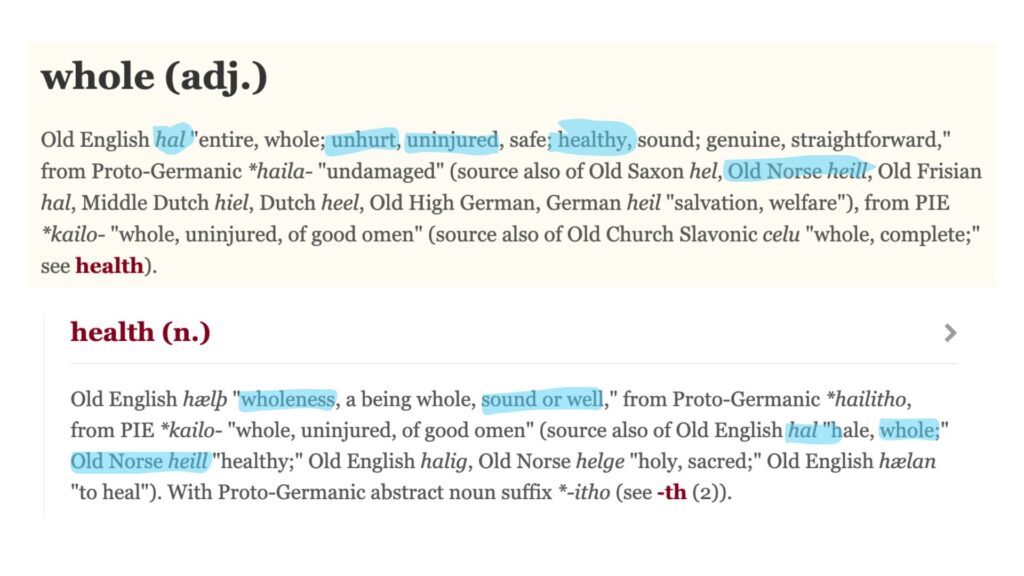
Whole has the same meaning as healthy.
So does holy.
Think about that!
Choosing to become a whole, loving and wise person fosters meaningful relationships.
Subsequently, you stimulate the release of ‘feel-good’ neurotransmitters in the brain.
Neurotransmitters are the antidote for stress, whereas stress inhibits neurotransmitters.
Emotional nourishment has a profound effect on your health and happiness.
From my experience, and thus, in my opinion, there is only one way to increase your health, happiness, or success, and that is to increase your level of conscious awareness and raise your vibration.
The archetypes model shows you how.
Archetypal qualities are energies, and the more qualities you access, the higher your vibration becomes.
Get to know your Archetypes
The next time you experience a problem, ask yourself, how you are creating the problem or why you are experiencing these circumstances. Life is your teacher.
If you don’t find an answer, contact Rich on the contact form below to schedule an appointment. Alternatively, sign up for our Self-Development Program: Beyond The Comfort Zone.
This life coaching program is an introduction to the archetypes where you will learn how to identify which archetypes are blocking you from moving forward, and which archetypal qualities will transform your life.
If you feel it’s time to stop ignoring the parts of your personality that can help you get from where you are to where you want to be, get in touch by using the contact form below.
References
[1] Carl Jung, CW7 Two Essays on Analytical Psychology, par. 308 (1966)
[2] Carl Jung, CW5, Symbols of Transformation, 2nd ed. par. 644 (1967)
[3] Sigmund Freud, Part Three: General Theory of the Neuroses XXIII. The Development of the Symptoms (1920)
[4] Carl Jung, CW7 Two Essays on Analytical Psychology, 2nd Ed, par. 18 (1966)
[5] Carl Jung, CW7 Two Essays on Analytical Psychology, 2nd Ed, par. 27 (1966)
[6] Carl Jung, Structure & Dynamics of the Psyche, 2nd Ed, par. 250 (1970)
[7] Etymonline, Origin and history of whole