

“Man has sensed always that wholeness or integrity is an absolute necessity to make life worth living. Yet, over the ages, he has generally lived in fragmentation.”
~ David Bohm, Wholeness and the Implicate Order
Do you have emotional wounds and feel that there is a part of you that is missing?
Every time you feel anxious, get angry when you don’t get what you want or avoid a difficult conversation, it’s because a part of you is missing.
You experience these moments when you don’t have the archetypal quality to manage your environment. It happens because parts of the personality are rejected, suppressed, and rejected.
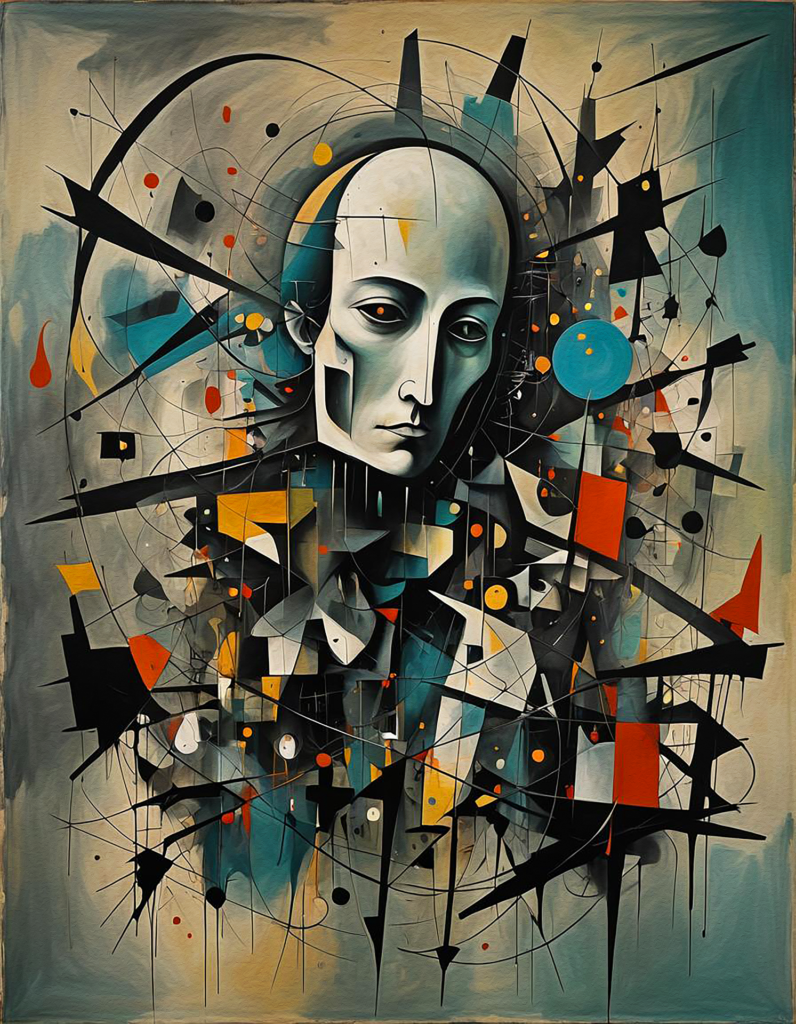
When parts of the personality are split off from conscious awareness, it creates a fragmented personality.
This is what is mean by dismemberment.
Psychology has deliberately chosen the term. To dis-member is to separate something that was once a whole into individual parts. Dismemberment means you no longer have access to traits, attitudes or beliefs that would enable you to encounter and overcome anxiety, anger and avoidance.
The important point is that the rejected part does not cease to exist simply because the conscious mind no longer acknowledges it.
It continues to influence your behaviours, how you think and how you feel.
To restore the fragmented personality, it is necessary to re-member the part of you that was split off and caused an emotional wound.

How the personality becomes fragmented
The nervous system stores information about our experiences, including memories associated with emotions, relationships and threats. When an experience is too uncomfortable to acknowledge, an aspect of consciousness can become separated from ordinary awareness.
The ego consequently has no direct access to that part of the personality.
You may therefore genuinely believe that you’re one way while behaving in ways that contradict your conscious intentions.
Carl Jung described this process clearly:
“Should the repression succeed, it disappears from consciousness and proceeds to unfold a subconscious activity, which runs counter to conscious aims, even producing effects whose causation is a complete and ignorant to the individual.”
~ Carl Jung, Psychological Types, CW6
This explains an apparent contradiction in human behaviour.
Someone may consciously consider themselves generous while secretly behaving in self-serving ways.
Another person may believe they are calm yet repeatedly lose their temper.
Someone may consciously desire intimacy while continually doing things that push people away.
The conscious intention is genuine, but conscious awareness of how to create the outcome you want is lacking. You have not learned a specific behaviour because the archetypal quality you need is split off.
Jung suggested that a fragmented personality makes it impossible for you to adapt to certain situations until you become consciously aware of the unconscious drives that influence your behaviour.
The contradiction exists because the information you need to access is being blocked by synaptic receptors. Repression is a biological process.
How is the fragmented personality split off?
At some point in the past, probably when you were a child in behaved in a way that was not acceptable to your parents. For example, you cried because you couldn’t have ice-cream and you’re father said, stop being selfish or I’ll give you something to cry about.
The selfish part of you was deemed bad. It was repressed and ignored. To compensate, the central nervous system created a program that makes you behave with kindness and generosity to be accepted.
You become a people-pleaser.
Another example. You always come second or third at school, and even though you think you did okay, nobody gives you any credit or validation for second or third. You develop a subconscious program that says: I’m not good enough. I must do better.
The central nervous system creates a program that prompts you to try to be the best.
You become a perfectionist and only feel satisfied when you are flawless. Successes and minor victories cannot be enjoyed unless you make zero mistakes.
The fragmented personality part that is missing is the capacity to accept yourself and your limitations. You are only as good as you can be on any given day.
Just enjoy being.
A dismembered aspect of the fragmented personality does not simply disappear. If a quality is excluded from conscious life, it can find alternative ways of expressing itself.
And that often means through maladaptive behaviours.
Synaptic receptors inhibit the flow of energy, essentially cutting you off from accessing the parts of your personality that were previously rejected.
Jung observed that psychological functions cannot simply be eliminated. Instead, they are distorted.
This is why repressed material can emerge through what appears to be irrational behaviour, recurring emotional reactions, compulsive patterns or neurosis. The person may not understand why they react so strongly because the motivation originates outside conscious awareness.
Jung connected these recurring patterns with archetypes and complexes.
Archetypes can be understood as fundamental patterns of psychological functioning. When their qualities are integrated, they can contribute constructively to personality.
When they are suppressed or distorted. The fragmented personality appears in immature or problematic forms.
As Jung wrote:
“In reality we can never legitimately cut loose from our archetypal foundations unless we are prepared to pay the price of a neurosis…”
~ Carl Jung, The Archetypes and the Collective Unconscious, CW9
It is tempting to associate psychological fragmentation exclusively with extreme traumatic experiences. But fragmentation can occur through much more ordinary experiences, particularly during childhood.
A child depends upon other people for acceptance, protection and belonging. When a parent, teacher or peer repeatedly communicates that a particular aspect of the child’s personality is unacceptable, the child may learn to suppress that aspect.
- A boisterous child may be repeatedly told to behave.
- A sensitive child may be ridiculed for being emotional.
- An assertive child may be punished for being difficult.
- A curious child may be discouraged from questioning authority.
The child learns a simple lesson:
This part of me is not acceptable.
The conscious response is suppression. The rejected quality is pushed out of ordinary awareness because maintaining connection with the people around them appears more important than expressing themselves authentically.
Jung recognised the role of repression in the formation of complexes:
“Many complexes are merely split from consciousness because the latter (the ego) preferred to get rid of them by repression.”
~ Carl Jung, Psychology and Religion
The result is a fragmented personality.
One part of the personality is allowed to participate in conscious life. Another is excluded.
Fragmentation in adulthood
The consequences can continue long after the original circumstances have disappeared.
A person who learned that assertiveness was unacceptable may become excessively accommodating. Someone who learned that expressing emotion was dangerous may become emotionally detached. Someone who internalised repeated criticism may develop a persistent sense of inadequacy.
The original experience may no longer be consciously remembered, yet the pattern remains.
This is why psychological patterns repeat themselves and can appear disproportionate to the circumstances that trigger them.
The present situation activates something that belongs partly to the past.
The conscious mind experiences the reaction as though it is happening for the first time. The unconscious pattern, however, recognises something familiar.
This can produce anxiety, anger, withdrawal, compulsive behaviour, fear of rejection and other forms of distress. Dissociation can also occur, ranging from relatively mild experiences such as zoning out to more serious dissociative conditions.
The point is not that every psychological difficulty is caused by repression or archetypal fragmentation. Human psychology is more complex than that. The point is that unconscious material can influence behaviour without the individual understanding its source.
From dis-memberment to re-memberment
The solution is not to eliminate the rejected part.
It is to re-member it.
Re-membering means bringing the split-off quality back into conscious participation so that it can become part of the whole personality again.
This begins with recognising what is missing.
You may know that you are overly passive, but not recognise that assertiveness has been suppressed.
You may know that you constantly seek approval, but not recognise that you have rejected your own sense of worth.
You may know that you struggle with intimacy, but not recognise that the capacity for emotional openness has been pushed out of conscious awareness.
Identifying the behaviour is therefore only the beginning. The deeper question is:
What quality of personality is trying to express itself through this behaviour?
This is where the archetypal model becomes useful.
The purpose is not to label yourself with an archetype. It is to identify qualities that are underdeveloped, distorted or excluded from conscious awareness, and then find healthier ways to express them.

Restoring the Self-ego relationship
In Jungian psychology, this process can also be understood through the relationship between the Self and the ego.
The ego represents the centre of conscious awareness. The Self represents the wider totality of the psyche—the organising principle of wholeness.
Edward Edinger described the Self as the “supreme psychic authority.”
“The archetypal psyche has a structuring or ordering principle which unifies the various archetypal contents. This is the central archetype or archetype of wholeness which Jung has termed the Self.”
~ Edward Edinger, Ego and Archetype
When the ego identifies exclusively with a limited version of itself, it can reject qualities that do not fit its preferred identity. The personality becomes divided between what the ego accepts and what it refuses to acknowledge.
Re-memberment restores the relationship.
You begin to recognise that the qualities you have rejected are not necessarily enemies. They are parts of the total personality that require conscious integration.
That does not mean acting on every impulse.
Integration is not indulgence.
Aggression, for example, does not have to become violence. It can be channelled into assertiveness, physical activity, competition, discipline or purposeful action. The objective is to give the underlying quality a conscious and constructive expression.
Becoming whole
David Bohm’s observation provides a fitting conclusion:
“If he can include everything coherently and harmoniously in an overall whole that is undivided, unbroken, and without a border…then his mind will tend to move in a similar way, and from this will flow an orderly action within the whole.”
David Bohm, Wholeness and the Implicate Order
Wholeness does not mean becoming a perfect person.
It means becoming less divided.
The aim of self-development is not to destroy the parts of yourself that cause discomfort. It is to understand them, bring them into conscious awareness and discover a constructive way for the rejected parts of you to participate in your life.
When you connect with your emotions, the parts of you that have been dis-membered can be re-membered.
And when the fragments of personality begin to return to the whole, the relationship between the ego and the Self can become more conscious, integrated and harmonious.
If you recognise that parts of your fragmented personality are seeking expression through maladaptive behaviours, sign up for the Libera Mente life coaching program, Beyond The Comfort Zone and re-member the fragmented parts of your personality.
