
When did you last feel genuinely at ease?
Not because everything in your life was sorted, but simply because you were okay with yourself in the environment you were in.
Inner peace is the energy of the Divine Child archetype.
For many people, it’s been a long time since they felt it.
Today’s world has become so judgmental, divided and unsafe that many people feel they must hide their authentic selves to gain acceptance.
And this puts people on edge.
It makes them feel unsafe, fearful of being judged and ostracised. So they stay safe and let others make decisions for them. They allow things to happen to them instead of for them. And they become chronically anxious and neurotic that they will not survive in a world they are afraid of.
And I’m not talking about physical survival. I’m talking about emotional survival.
When your life choices are influenced by worry, you are not expressing yourself freely.
You are not being authentic.
You are fearful of being you, of accepting your limitations and worried about being alone.
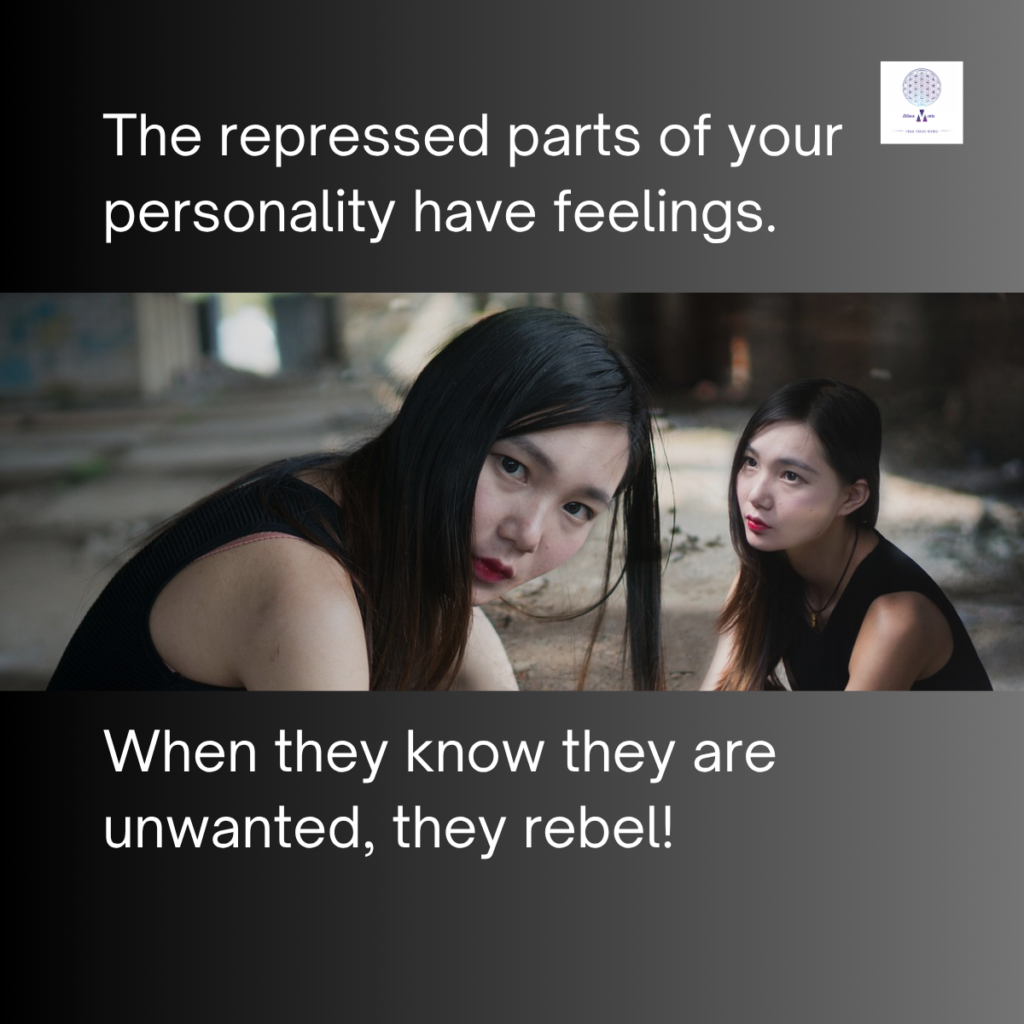
If this sounds like you, let me tell you this: you are repressing parts of your personality. And that is not good news for your long-term health.
An undeveloped Divine Child is riddled with chronic anxiety, neuroticism and dis-ease.
What begins as a complex becomes a neurosis. If you continue to repress emotions (parts of your personality), the stress that challenges, problems, and conflicts in life cause you to develop a disease. A disease becomes a debilitating disease.
A developed Divine Child enjoys emotional freedom.

The Divine Child Archetype: Where Life Begins & Ends
The Divine Child is where it all starts.
This archetype is the most primitive and innate aspect of your personality; the Instinctive Brain attuned to your needs, carefree and living in the moment.
The Instinctive Brain is the most connected to the Higher, but unless other archetypes are developed, it’s also the most vulnerable to the external world.
Before the world got its hands on you — before school, expectations, heartbreak — you were content, whole and at peace.
That’s your True Nature. That feeling doesn’t just disappear. It gets buried. Lost in a mountain of information communicated between neural networks.
To survive emotionally, the central nervous system desensitises you to perceived threats.
The more pain you experience, the more numb you become to disappointment, exclusion and failure.
Numbness is a shield that protects you from pain.
Pain is darkness.
The Divine Child wants light.
This most hopeful and optimistic of archetypes is the part of your psyche responsible for keeping the fire of passion alight. The fire that burns within is the essence of your True Nature with all its aspirations, desires and beliefs.
At your core, you know what you need from life, and you know what your purpose is in life. This is what the Divine Child tells you.
But when the outside world cuts you off from your essence, the light of your inner fire does not reach the surface of the conscious mind. It stays buried within, smouldering and in danger of going out.

One of the functions of the Divine Child is to remind you who you really are. It informs you and guides you to the things you need in life to fulfil your life’s purpose, aspirations and desires.
This archetype surfaces as intuition, and when developed, you trust it implicitly.
When the Divine Child archetype is fully developed, it sits side-by-side alongside the Ruler. The Self-Ego axis, balanced, harmonious and ready for anything.
To develop this archetype, practice living in the moment.
Be carefree.
When I say be carefree, I don’t mean to stop caring. I mean to stop worrying, to stop caring about what people think of your life choices.
Lose all sense of caring about the material world and the myriad distractions it lures you in with.
The external world cuts you off from your internal world. Ideally, you should have a foot in both worlds.
When you’re freed from caring, you’re more inclined to grow.
When you live without fear, you can become the person you are meant to be.
The American psychologist Abraham Maslow noted:
Thought-Provoking Quote
“The observation upon which this generalisation is based is that self-actualising people enjoyed life in general and in practically all these aspects, while most other people enjoy only stray moments of triumph, of achievement or of climax or peak experiences… Partly, this intrinsic validity of living comes from the pleasurableness inherent in growing and in being grown. But it also comes from the ability of healthy people to transform means-activity into end-experience, so that even instrumental activity is enjoyed as if it were end activity.”
~ Abraham Maslow, Toward A Psychology Of Being, p. 34 Kindle Loc 617, (1962)
Everyone has an innate force which either shrinks or grows.
One force seeks security, familiarity, and protection. It encourages you to stay within what you know, avoid uncertainty, and hold tightly to established patterns, relationships, and beliefs.
This part of you resists change because growth involves risk.
This energy surfaces as worry, doubt and limiting beliefs. It makes you procrastinate, turn to creature comforts and avoid engaging with life.
All these things are the archetypes protecting the Divine Child from pain and suffering; from feeling inadequate, incompetent and unlovable.
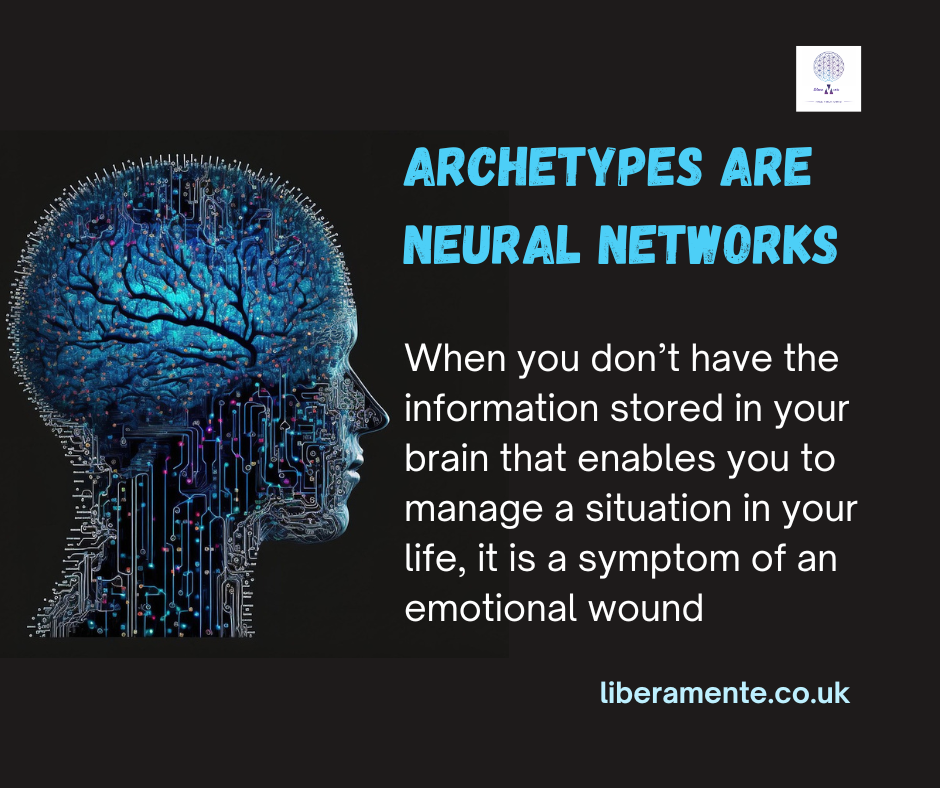
Yet all the Divine Child really wants is to evolve; to learn, to grow and to play with no holds barred.
A child relies on its parents to feel safe. The Divine Child relies on the development of the other archetypes to feel safe.
This archetype is your drive towards growth, evolution and success. But it doesn’t achieve anything by itself. It merely gives you the aspiration, the inspiration or the desire.
The Divine Child is the most authentic version of yourself and inspires you to pursue the fullest expression of your potential.
It surfaces as ideas and impulses that prompt you towards self-discovery, instincts that reveal your unique strengths, and the self-belief to expand your capabilities.
The only way to develop the Divine Child and achieve the inner peace it brings is to engage with life more fully, trust yourself to get to where you want to be in your own time, and to embrace both your strengths and vulnerabilities.
When you feel secure, you’re more willing to explore, learn, and connect with others.
You adventure beyond your comfort zone.
On the flip side, when the Emotional Brain senses a threat to your security, your natural tendency is to retreat towards the safety of familiarity.
In moments of conflict between growth and security, most people opt for security.
The archetypes reveal the path towards growth.
The Superpower of the Divine Child
Every archetype has a core gift, and the Divine Child’s is belief — an intuitive knowing that life supports you when you stay true to yourself.
The Divine Child operates from a quiet, unshakeable trust. It believes that what you need will come.
It recognises that challenges are necessary for growth.
And that the process of becoming relies on in-formation.
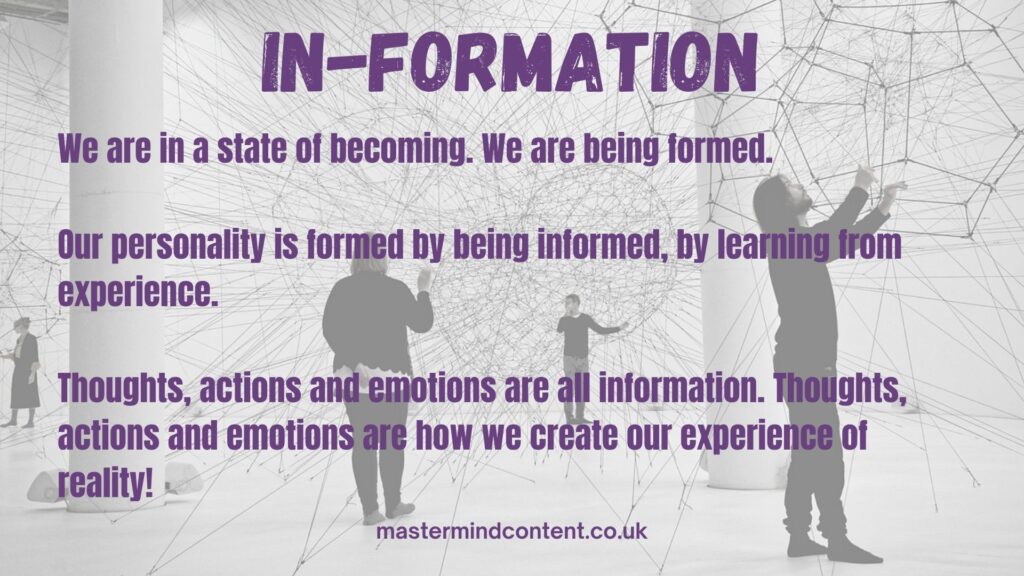
Life is a teacher, and conflicts, challenges and failures are nourishment.
When the Divine Child archetype is active in you, its most recognisable qualities show up as:
Belief — A genuine, felt sense that you are capable of growing, changing, and creating. Not arrogance. Not denial. Just a quiet confidence in life’s direction.
Carefree ease — You let yourself be who you are without constantly monitoring what other people think about it. Emotional freedom is the key to inner peace.
Hope and Optimism — Real expectations that things will work out — even when things are not taking shape.
Playfulness — You bring lightness into conversations, relationships and workplaces. Joy is not a sensation you experience in fleeting moments of the back of success or pleasure.
Joy is a state of being when you approach life with a playful attitude.
Gratitude — Recognising and appreciating the things that genuinely support your life and wellbeing shifts a longing for desire and brings your attention to the present. Your needs are already met.
Authenticity — This is where inner peace lives. Being your authentic Self allows you to live in alignment with your true thoughts, feelings, and values. When you stop seeking approval and pretending to be the person you think the world wants you to be, insecurity dissolves. Authenticity lays the foundations for growth, builds self-trust and strengthens relationships.
When you embody the qualities of the Divine Child archetype, you’re happy being a human being and not a human trying to be.
You have nothing to prove, but you have all sorts to achieve.

When the Divine Child is Repressed
I don’t think it’s an exaggeration to say that the Divine Child archetype is repressed in most people. How many children do you know living in an adult’s body?
Society designs its citizens to close down. Sigmund Freud noted that civilisation is responsible for much of human suffering.
Freud’s contemporary and one-time advocate, Carl Jung noted:
Thought-Provoking Quote
“Too much of the animal distorts the civilized man, too much civilization makes sick animals.”
~ Carl Jung, CW7 Two Essays on Analytical Psychology, 2nd Ed, para 32, (1966)
There has to be a balance and a communion between the animal and the civilised man, the instinct and the intellect.
The Divine Child archetype is the animal instinct. It sits alongside the Ruler when you learn how to survive authentically in a world of repressed animals.
Repression of the Divine Child usually begins in early life.
As children, we absorb information from our environment at a rate we can barely comprehend — and our nervous system builds programs to help us adapt, fit in, and stay safe.
Some parts of our instinctive nature get labelled “not acceptable.” Wrong. Unworthy.
We learn to bury the authentic Self, dial down spontaneity, and hand over autonomy.
Instead, we perform a version of ourselves that gets approval.
We adopt learned behaviours to adapt to ways of being that are accepted by others.
The problem is that over time, your connection to your inner child weakens. Eventually, you lose touch with yourself.
Some people even reach a point where they don’t know what they need anymore.
When you cut yourself off from your feelings, you set yourself up for depression.
Repression = De-Pression.
Maslow also noted that ill-health is often the result of a sick culture. Not only that, but “sick individuals make culture more sick.” (Maslow, 1962)
When the Divine Child archetype is denied the possibility to mature, you’re more prone to illness. Permitted to grow, and you are healthier, more fruitful, and happy.
A repressed Divine Child looks like this:
You feel chronically insecure — easily led, easily manipulated, overly dependent on others for reassurance, direction, and a sense of safety.
Emotional maturity stalls. You refuse to take responsibility for your life and will not accept accountability.
You may do your best to appease others one moment, but have a sense of entitlement the next and kick off when you don’t get it.
This archetype dissociates quickly when you feel uncomfortable. You avoid difficult conversations, naively believe what other people tell you, and play the victim mentality card when things go tits up.
Deep down, you know what you need to do — but you don’t have the qualities to do it, and you’re too afraid to push beyond your bubble of comfort.
You hope someone else will rescue you from having to make the wrong choice.
I noticed the American psychologist Dan Kiley references the Divine Child archetype in his 1983 book, Peter Pan Syndrome, Men Who Have Never Grown Up.
Calling it the “Peter Pan complex” Kiley describes adults who refuse to take responsibility for their lives and strive towards maturity.
However, there are underlying causes: feeling unloved, inadequate and incompetent.

This energy ultimately manifests as co-dependency, emotional paralysis, and a quiet retreat from real connection into fantasy and comfort.
The world outside feels too unsafe.
So you stay within yourself and deny any chance of joy, happiness and success.
Thought-Provoking Quote
“They became masters at explaining away failure and refusing to try anything new. They found a way to cope with loneliness, and they would not and eventually could not risk rejection by experimenting with new, more appropriate behaviors.
~ Dan Kiley, Peter Pan Syndrome, Men Who Have Never Grown Up, p.102 (1983)
Underneath the emotional armouring and the false justifications that ‘everything is alright’, a storm is brewing.
Development Goals for the Divine Child Archetype
Reconnecting with the Divine Child initially involves reclaiming the qualities you abandoned to be accepted, approved and validated.
Without developing archetypes that enable you to establish a sense of security, the Divine Child archetype can never feel safe.
Once you grow in competencies, confidence and calm, you reconnect to yourself, to the essence of your inner child.
When you’re ready take the following steps:
Step One: Ask yourself what you actually want
Not what you think you should have or do, but what you actually need.
What do you want from each area of your life — home, work, social, and private?
The answer that surfaces without justification is your inner child guiding you in the direction you need to go.
Step Two: Let go of what no longer serves you
To bring in new ways of being, you have to let go of habitual patterns of attitudes, motivations and behaviours.
Observe whether your thoughts and actions are helpful, positive and constructive or unhelpful, negative and destructive.
Where are you holding onto grudges, criticism and fear?
Which habits do you recognise as comfort-seeking?
How do you react when you don’t get what you want?
Step Three: Be playful
Playfulness is a way of connecting with others and being yourself without worrying what other people think. Too many people these days have forgotten how to be playful because they have developed the false belief that being playful is childish, unseemly and inappropriate.
On the contrary, being playful is found to support sound mental and physical health. Lightening the mood helps to lower stress and enhance general well-being.
Step Four: Live in the moment
Life is about being with a view to becoming. Being involves living in the moment. Becoming hinges on trusting the process. The Divine Child has to learn to be grounded, quick-minded and open to life. Doing so gives you the foundations to create the experiences you want to live — and life becomes effortless.
Work with a Life Coach
The Divine Child archetype teaches you that peace isn’t something you achieve.
It’s something you re-member.
Beneath the conditioning, the coping strategies, the performance, and the protection — the essence of your True Nature is still there.
But it’s buried.
When parts of the personality are dis-membered, we forget how to be adventurous, joyful and whole.
Reconnecting with yourself helps you to decide what you want from life and what you need to get it.
You don’t have to build yourself from scratch. Many of the qualities you need to succeed are already programmed in your central nervous system.
But so are the qualities that deny you from being happy, successful and fulfilled.
When the Divine Child is healed and integrated, you stop chasing happiness in the outer world. You simply feel it inside.
Success, happiness and fulfilment stop being something you crave for and become something you are.
Reconnect with yourself by signing up for the Libera Mente Self Healing program: Beyond The Comfort Zone today.