
Decision-making can be tough. Taking action can be even harder.
To get from where you are to where you want to be is all a matter of choice. And some choices will require making tough decisions.
Sometimes, the fear of making the wrong choice might prompt you to not make a choice at all. But doing nothing can come back to haunt you further down the line.
In other circumstances, non-action is the best choice. Taoism calls this wu wei, action in non-action.
Either way, decisions need to be followed up with decisive action, and ideally the right action. This can be made easier by tapping into your Ruler archetype and aligning your behaviours with your intention.
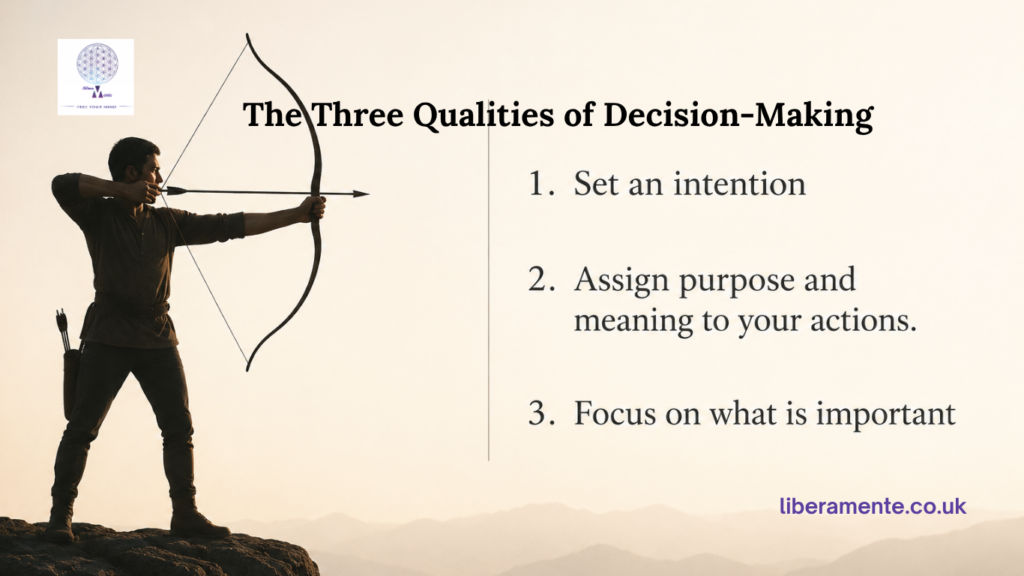
You can read more about how to make the right decisions in the article titled The Noble Eightfold Path in Buddhism: The Art of Good Decision-Making, which details the teaching of the historical Buddha, Gautama Siddhartha.
When you don’t know what the right action is, decision-making can feel overwhelming. To loosen the grip of fear, follow the process below:
Put Decisions in Writing
Attempting to make decisions solely in your head often leads to looping over the same conflicting thoughts. Instead of resolution, each new idea adds stress as your mind keeps comparing it to the original thought.
Introducing a visual element can break this pattern. If you have an image or a story that can help you — such as mythology — use it to your advantage.
Take a moment to jot down your thoughts about the decision at hand, your desires, and your concerns. Often, what seems complex in our minds becomes remarkably clear and straightforward when written down.
Clarify Your Goals
Exceptional decision-making starts with clarity. To make effective choices, you must have a clear understanding of your and your goals, values, and priorities.
Ask yourself: What is my desired outcome?
Now ask yourself: Why do I want this outcome? What is the ultimate purpose?
Clarity is power. When you know what you want and why you want it, decision-making becomes much simpler.

Base Decisions on Probability
When you know what you want but don’t know how to get it, basing decisions on probabilities is the way to go.
If crystal balls worked to guarantee you make the right decision, everyone would have a crystal ball. The next best thing is discernment. Assess the available information, envisage the most likely outcomes and make a choice on the highest probability which is most acceptable to you.
Leaders often have to make decisions without total certainty of the outcome. Sometimes, decisions are based on probable outcomes, sometimes on a gut feeling.
Either way, success relies on your willingness to take action.
You only know if you make the right decision by taking action. And if you don’t attain the outcome you hoped for, you have more information to make another decision.
Tough decisions are less about making the “right” choice and more about making a choice that moves the ball forward.
Sometimes, the worst thing you can do is to put off taking action before you have all the information. Procrastinating may mean you miss out on an opportunity.
If a decision turns out to be wrong, you can adjust later on or learn from your mistakes and try again. We grow through failure so never be afraid to make the wrong choice.
The most important decision is to make a start.
Align Decisions with Values, Principles Or Boundaries
Most decisions should reflect your values, principles and boundaries. Use the Ruler Tool to establish your values, principles and boundaries.
It might be a tough choice, but if it aligns with what matters most — your desired outcome and purpose — you are heading in the right direction.
Decision should also come from a love-based centre. Making a decision based on fear could limit the potential of the outcome. Whilst sometimes you should take an air of caution, don’t let limiting beliefs get in the way of progress.
If thoughts such as “I’m worried about…” or “I don’t think I can do this…” enter your mind, try expanding your options and exploring alternative choices.
Seek out diverse perspectives, gather information quickly, and challenge your assumptions. This approach opens the door to innovative solutions and unforeseen opportunities. Once you have your mind in the right place and all the necessary information, you need a logical, repeatable process to make decisions and a deadline. Otherwise, you’ll succumb to paralysis by analysis.
Make Decision-Making Easier
Archetypes can sometimes make decision-making easier. It all depends on what decision you need to make. But in the case of lifestyle changes, crossroads and dilemmas, the archetypes are an effective source of decision-making.
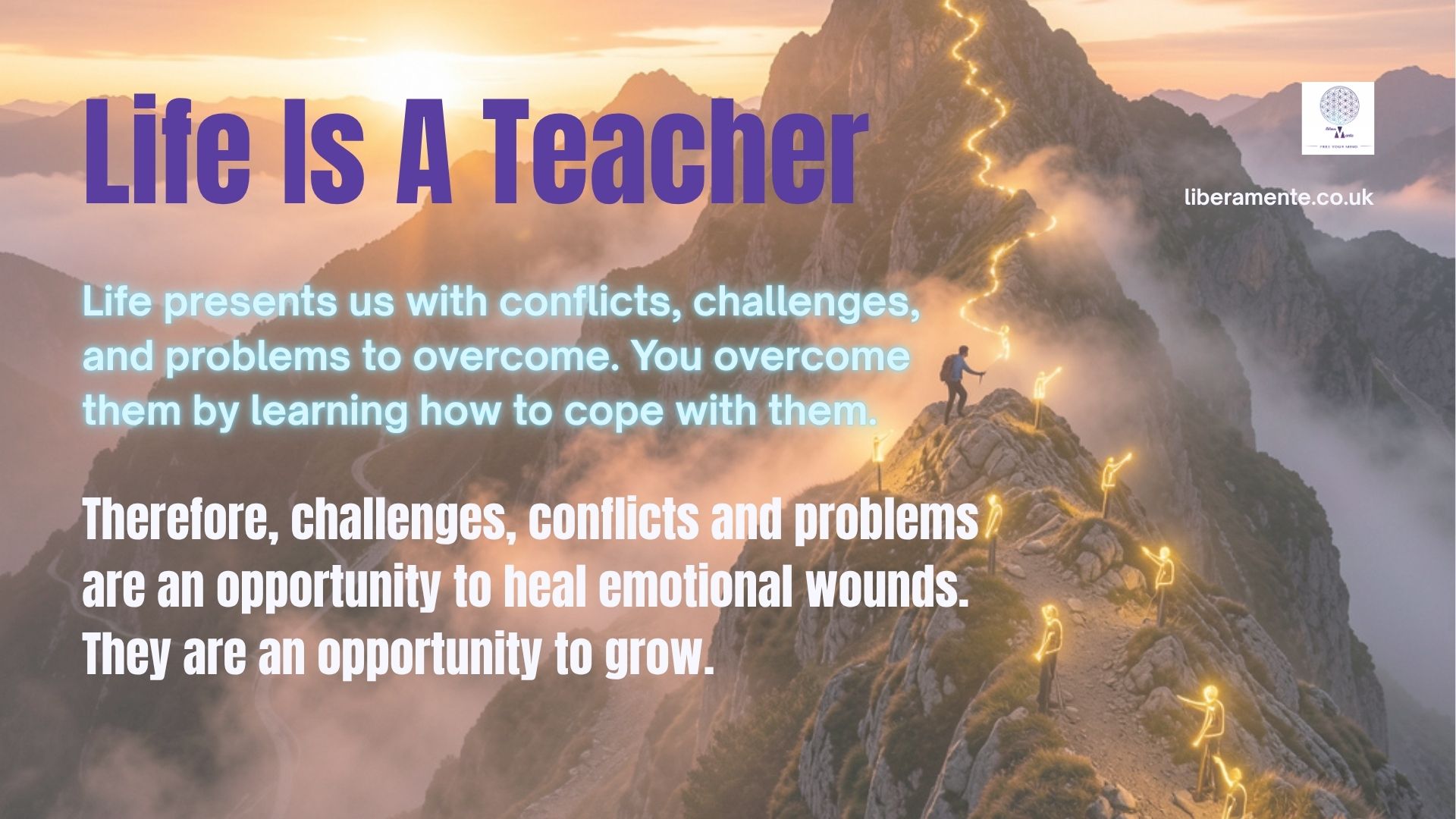
Every problem, challenge and conflict you encounter in life is an opportunity to learn something about yourself; an opportunity to grow. When you realise how you’re creating challenges in your life because of the decisions you make, it’s easier to make a decision to do something differently.
Archetypes are identifiable patterns of thoughts, actions, and emotions which influence how you experience life. How you experience life is determined by the decisions you make.
If you want to know which archetypes are influencing your decision-making, sign up for our life coaching program, Beyond The Comfort Zone. The program provides you with insights about your personality and reveals why you are experiencing certain events in your life, particularly cyclical patterns.
The Libera Mente archetypes program explains the functions, motivations and emotional wounds for each of the 12 archetypes. You will learn how to recognise which archetypes are developed, which are undeveloped, and how they can help to improve all aspects of your life.
Each month, you will work with a different archetype and discover whether that part of your personality is helping you to manage your life effectively, or whether it is causing problems, conflicts and challenges. When an archetype is carrying an emotional wound, our archetypes model explains what the wound is, how it caused and how you can resolve it.
If you want to get from where you are to where you want to be faster, easier and more successfully, sign up for our self-development program today and transform your life by moving Beyond The Comfort Zone.
